
On Matters of Resolution!

Mike McNamee lets off steam about chip size and advertising copy writers as he ponders the trends in higher pixel counts on camera chips.
"Closing the lens down just one stop from optimum can cause a catastrophic loss of image detail across an entire picture" Lester Lefkowitz The Manual of Close-up Photography
Andy Astbury's comments on diffraction limitation set in motion a train of events culminating in this page or so of writing. The quest for market-place advantage has had the advertising boys 'bigging up' pixel count as if it were the only thing that mattered about a camera. If you look at the bodies of both the Sony Alpha A350 and the Olympus E 520 the pixel count is even writ large, as an engraving on the front of the camera, highlighted in white, in case the unsuspecting punter misses it! It's a bit like the way they used to badge a saloon car with '12-valve' – most of the buying public had not the faintest idea why 12 valves are better than eight. Now that so many engines have got 12 (and everybody is benefiting from piston-head scavenging), the makers have stopped telling you how many valves you have on the car boot. This nonsense all started with 'twin cam' and 'twin OHC' badges for those of you old enough to remember – happy days!
In much the same way, the camera makers have matured in their outlook and the high-end cameras boast less about pixel count and more about some of the things that really matter. They also offer a range of resolutions, chip sizes and pixel densities, so that the professional can choose on the criteria that matter to them and their type of shooting.
Camera purchase issues fall into two categories, psychological and technical. Under psychology comes a need to have a demonstrably larger (ie more 'professional') camera than Uncle Fred at the wedding. Now that the wedding professional does not hide behind a Blad or Mamiya 67 they can look a little too much like a guest, many of whom will be toting the latest DSLR. Having extra pixels over the guests' cellphones is a perceived (and real) advantage!
On the technical side matters are more ordered. You have to choose between the 'low-noise, high ISO, small pixel count' and the 'higher noise, slower ISO, large pixel count'. The choice is sector-dependent. By this I mean that the wedding shooter will strive for more ISO but never, perhaps, enlarge greater than 16x12 inches, whereas the fashion shooter can go for a higher pixel count and avoid image noise/low ISO issues by simply cranking in more light on the Elinchroms!
Nature photographers are caught between a rock and a hard place (sometimes literally). The telephoto situations require fast shutters and wide apertures with whatever light is available. However, (and this is the point of this little article), the insect photographers are always strapped for depth of field, while at the same time demanding sharpness above many other features of an image – you may get away with a slightly soft image of a bride, it may even be better for it – try that with a dragonfly!
Let us look specifically at pixel count, and more particularly at pixel pitch (the distance between two pixel sites on the chip). The pixel count is calculated by multiplying the number of pixels across by the number of pixels going down. So a chip with 3,000 x 2,000 pixels would have 6,000,000 pixel sites in total. This big number is shortened by calling it a mega pixel (mega equals 1 million (roughly), if we ignore binary theory). The camera software assigns a colour number to each pixel site in the red, green and blue channels which boosts the file size by three, making our six mega pixel camera create an 18 megabyte file.
So far then we have looked at how many pixels there are and how many are contained in a certain area. So, assuming the pixels are square (not always true, Nikon's are rectangular, FujiFilms are polygonal) then if you divide the run along the chip by the pixel count you get the pixel pitch. This does not tell you anything about the area of a pixel site. In order to operate, pixels need space all around them to separate them from their neighbours. This is to prevent them from shorting electrically, allow data to run down the chip for collection and finally to prevent the electrons from one pixel squabbling with their neighbours. Nature shooters should think of this like gannets' nests in a colony, each is just out of pecking range from their neighbour. When electrons squabble with each other it produces blooming in the image at a very fine level, manifested as a loss in contrast.
The next issue is the pixel area that faces the incoming light rays of the image. The larger the area, the greater the electrical signal, which in turn reduces noise and thereby allows higher ISO ratings. Therefore fewer pixels spread over the same area is, within limits, a preferable solution to noise and ISO issues.
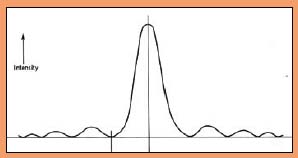
The final piece of the jigsaw is 'diffraction limiting'. This is worthy of more discussion because it is a completely inescapable effect and absolutely nothing can be done to prevent its effect in softening images. Diffraction occurs when light passes over a sharp edge, through a slit or through a small hole. In a lens, when the diffraction pattern reaches a similar size to the detail being imaged a loss of resolution occurs. Diffraction depends upon the size of the aperture and the wavelength (colour) of the imaging light. How diffraction effects a digital image depends upon the pixel pitch. Here is the way it works:
Find the Membership package for you:

Society of International Media & Press Photographers (SIMPP) is a trading name of BPPA Ltd
Clwyd Chambers, Clwyd Street, Rhyl, Denbighshire, LL18 3LA, UK
BPPA Ltd Company Reg 0392 2894
VAT number 790 4289 05
Tel: 01745 356935
Corporate Partners



Newsletter
Subscribe to the Societies Newsletter. Subscribe here.
Privacy. - Partner Societies - London Photography & Video Show - Europe's Largest 'All-Welcome' Photographic Convention